
Frequently Asked Questions
Straight answers about mold, odours and indoor air quality, from the Ottawa team that deals with them every day.
Can't find what you're looking for? Reach out and we'll walk you through it, no pressure.
Honest guidance for Ottawa & surrounding areas
Mold, Odours & Indoor Air Quality
The questions Ottawa homeowners ask us most, answered in plain language. Tap any question to expand it.
General Questions About Mold
What exactly is mold, and why does it grow in homes?
Mold is a type of fungus that grows on damp materials like drywall, wood, carpets, insulation and fabrics. Indoors, it usually appears when there is too much moisture from leaks, condensation, high humidity or past water damage that never fully dried.
If a surface stays damp for long enough, mold spores in the air can land, grow and spread.
Is mold dangerous for my health?
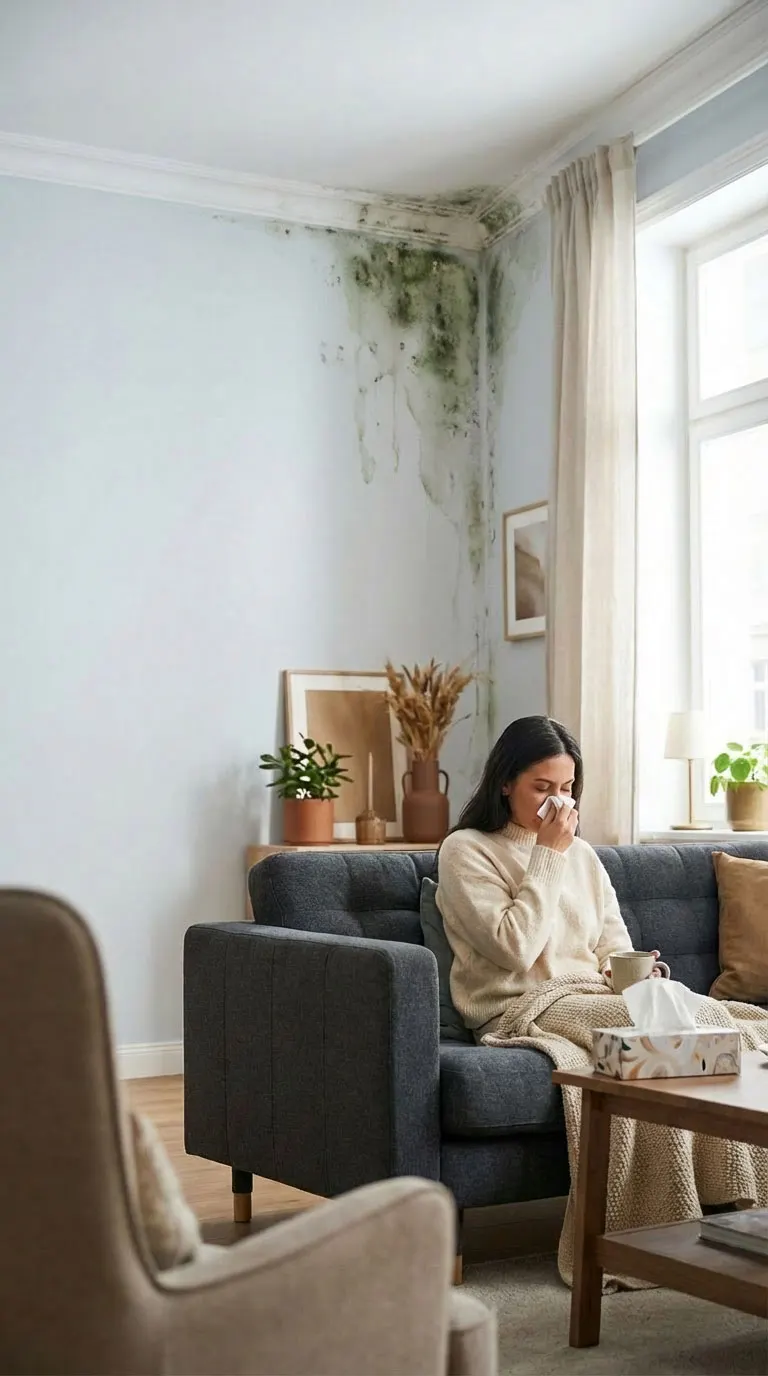
Health agencies in Canada consider indoor mold growth a potential health hazard. People living in damp, moldy homes are more likely to experience:
- Eye, nose and throat irritation
- Coughing, wheezing and phlegm
- Shortness of breath
- Worsening of asthma and allergy symptoms
Infants, children, seniors, pregnant people and those with asthma or other lung issues are often more sensitive to mold exposure. If you have health concerns, always speak with a healthcare professional, and consider a professional mold inspection to understand what's happening in your home.
How can I tell if I have a mold problem?
Common signs of a mold issue include:
- Musty or earthy odours, especially in basements, bathrooms or cold rooms
- Visible spots or staining (black, green, white or brown patches) on walls, ceilings, around windows or in closets
- Peeling paint, bubbling drywall or warped baseboards
- Water stains or areas that have been wet in the past
- Increased allergy-like symptoms when you're at home
The only way to know how serious it is (and how far it has spread) is through a proper mold inspection, and sometimes mold testing.
Should I worry about a small patch of mold?
A small patch (for example, around a tub or window) is common and can sometimes be cleaned safely if:
- The area is less than about 1 m² (a few square feet), and
- You fix the moisture source (like a minor condensation issue).
However, a “small” patch can also be a sign of a larger hidden problem, especially after leaks or flooding. If you're unsure, or if the area keeps growing back, it's smart to book a professional inspection.
Can I clean mold myself, or do I always need a professional?
It depends on:
- Size of the affected area
- Location (bathroom caulking vs. inside walls)
- Cause (minor condensation vs. major water damage)
- Who lives in the home (young children, seniors or people with asthma may need extra caution)
Small, surface-level growth in non-porous areas might be manageable with proper protection and cleaning. But for larger areas, repeated growth, or mold in porous materials like drywall, insulation or subfloors, professional mold removal is strongly recommended.
Why does the mold keep coming back after I clean it?
Because cleaning usually only touches the symptom, not the cause. Mold will keep coming back if:
- There's an ongoing moisture problem (leaks, humidity, condensation)
- The affected materials were never fully dried
- Contaminated materials weren't properly removed
- Hidden mold remains behind walls or under flooring
The key is to fix the moisture source and, if necessary, remove contaminated materials, not just wipe the surface.
Mold Inspection, Testing & Removal
What's the difference between a mold inspection and mold testing?
A mold inspection is a visual and diagnostic assessment of your home: we look for mold, moisture and risk areas using tools like moisture meters and hygrometers.
Mold testing involves collecting samples (air or surface) and sending them to an accredited lab to identify mold types and spore levels.
You can think of it this way:
- Inspection: is there a problem, where is it, and why?
- Testing: what exactly is in the air or on this surface, and at what levels?
In many cases, inspection alone is enough to plan remediation; testing is most useful when the situation is unclear, for documentation, or for health-related concerns.
Do I really need mold testing, or can we skip it?
Not every situation needs testing. Health authorities emphasize that visible mold generally needs to be removed, regardless of species, and that fixing moisture and cleaning or removal are more important than knowing the exact mold type.
Testing is particularly helpful when:
- There's no visible mold, but symptoms or odours suggest a problem
- You need documentation for real estate or insurance
- You want to confirm that remediation worked
- A doctor has recommended testing as part of a health investigation
We'll always explain when we believe mold testing is useful versus when it's an unnecessary expense.
How fast can mold grow after water damage?
Under the right conditions (warmth, moisture and organic material), mold can begin to grow within 24 to 48 hours after a water event like a leak or flood.
That's why it's so important to:
- Dry wet areas quickly
- Remove soaked materials that can't be fully dried
- Monitor humidity and condensation after a water incident
If you've had water damage, it's wise to consider a mold inspection even if you don't see mold yet.
What happens during professional mold removal?
Professional mold removal (remediation) usually includes:
- Assessment and planning: understanding how big the problem is and what caused it.
- Containment: sealing off the work area so mold spores don't spread.
- Air filtration: using specialized equipment to capture airborne particles.
- Removal of contaminated materials like affected drywall, insulation or flooring.
- Cleaning and treatment of remaining surfaces.
- Drying and moisture control to prevent mold from coming back.
- Final inspection and, if needed, post-remediation testing.
The exact steps depend on the size and location of the problem.
Is it safe to stay in my home during mold removal?
It depends on:
- The size and location of the affected area
- Whether sensitive people (children, seniors, people with asthma or other respiratory issues) live in the home
- How the work area is contained and ventilated
For small, well-contained projects, many homeowners can stay, especially if work is limited to one area like a basement. For larger or more complex projects, temporary relocation or avoiding the area may be recommended. We'll always discuss safety and comfort with you before starting.
Odours & “Musty Smell” Problems
What does mold smell like?
Mold often produces a musty, earthy, stale smell. Many people describe it as:
- “Damp basement”
- “Wet socks”
- “Old, closed-up cottage”
These odours come from microbial volatile organic compounds (mVOCs) that mold releases as it grows.
If you smell this regularly in certain rooms (especially basement, bathroom, cold room or around windows), it's a strong sign you may have a moisture or mold problem.
Why does my basement or bathroom still smell musty after I clean?
Because cleaning products only affect surfaces, not:
- Moisture hidden in walls, floors or ceilings
- Mold inside materials like drywall, insulation or subfloors
- Stale air and poor ventilation
If the underlying moisture, contamination or air circulation issue isn't solved, the smell comes back once the scent of cleaners fades. An odour inspection focuses on source-finding, not just deodorizing.
What's the difference between odour inspection and odour removal?
An odour inspection is about diagnosing the problem: understanding what's causing the smell and where it's coming from.
Odour removal is about treating and eliminating the source once we know what it is.
In many cases, we recommend inspection first, especially if the source isn't obvious or if there's a chance mold, moisture or air quality issues are involved.
Indoor Air Quality & Air Testing
What is indoor air quality, exactly?
Indoor air quality (IAQ) describes the condition of the air inside your home or workplace, including particles, gases, humidity and temperature.
Poor IAQ can be affected by:
- Mold spores and fragments
- Dust, pet dander and pollen
- Combustion products (gas stoves, furnaces, fireplaces)
- Volatile organic compounds (VOCs) from building materials, cleaners, fragrances, etc.
- Stale air and inadequate ventilation
- High humidity, which supports mold and dust mites
What are common signs that my indoor air quality might be poor?
Common clues include:
- Feeling better when you're away from home
- Frequent headaches, congestion, irritated eyes or sore throat
- Persistent musty or chemical odours
- Condensation on windows, or very humid or very dry air
- Visible mold, dust build-up or lingering smoke or odours
An air quality analysis can help separate what's “normal” from what might be contributing to discomfort or symptoms.
Do I need air quality testing or just an air purifier?
They do different jobs:
- Air quality analysis and testing help you understand the problem: what's in the air, at what levels, and what's likely causing it.
- Air purifiers (especially those with HEPA filtration) can help reduce particles in the air but don't fix underlying moisture, leaks or contamination.
If you're not sure what's wrong, an air quality analysis is usually the better first step. Once you know the cause, a combination of source control, ventilation and filtration is often the best long-term strategy.
What can I do myself to improve my indoor air quality?
General, research-backed tips include:
- Control moisture: fix leaks quickly, use exhaust fans in bathrooms and kitchens, run dehumidifiers in damp areas.
- Increase ventilation: when weather permits, open windows or use mechanical ventilation to bring in fresh outdoor air.
- Use high-quality filters in your HVAC system and change them regularly.
- Avoid unnecessary chemicals and fragrances: choose low-VOC paints and cleaners when possible.
- Don't ignore musty smells, visible mold or recurring condensation: they're signs of deeper issues.
A professional air quality analysis can give you a tailored plan for your specific home.
Practical & Booking Questions
How much do mold inspection, testing or removal cost?
Costs vary based on:
- Size and type of property
- How many areas are affected
- Whether testing is required
- How extensive the mold or damage is
Because every situation is different, we don't list one-size-fits-all pricing. The best way to get an accurate estimate is to contact us with a few details (what you're seeing, where, how long, etc.). We can often give a ballpark range and explain your options over the phone.
Does insurance cover mold damage or mold removal?
Sometimes yes, sometimes no. It depends heavily on:
- Your specific insurance policy
- The cause of the mold (a sudden, covered event vs. a long-term maintenance issue)
- How quickly the problem was reported and addressed
We always recommend:
- Reviewing your policy documents
- Calling your insurance provider to clarify coverage
- Documenting issues with photos, dates and any reports
We can provide inspection reports and documentation that may support conversations with your insurer, but we can't guarantee coverage decisions.
How should I prepare for a mold, odour or air quality visit?
Simple steps that help us help you:
- Clear access to basements, mechanical rooms, cold rooms, attics (if accessible), around windows and any problem spots
- Make a list of symptoms, smells and questions you have
- Avoid heavy cleaning or painting the affected area right before we come (it can temporarily hide signs we need to see)
- Secure pets if they're nervous with visitors or equipment
We'll let you know if your specific visit requires anything special.
I'm buying or selling a home. Should I get mold or air-quality checks done?
It's often a very smart move:
- Buyers can avoid surprise costs from hidden mold or moisture problems and negotiate repairs before closing.
- Sellers can address issues proactively or price the home realistically, reducing last-minute deal drama.
A targeted mold inspection (and in some cases mold testing or air quality analysis) can give everyone more confidence in the transaction.
Still Have a Question About Your Home?
If you didn't find your answer here, tell us what you're seeing, smelling or worried about. You'll get honest guidance from a local specialist, not a sales pitch.
Book a Free InspectionRequest a Free 10-Minute Phone Consultation
Tell us what you're noticing. We'll let you know if a visit makes sense, what it involves, and what your options are. No pressure, no obligation.
Call (613) 902-0600